Isn't this just the definition of the word extreme? I mean, I get that maybe they're using the word extreme to equal bad (maybe not), but I think this is just the definition of the word.
Why do you think it's bad to have an extreme opinion? I probably have quite a few of extreme opinions. Some wrong, some right, some I cherish, some I dismiss.
> Isn't this just the definition of the word extreme?
Absolutely not. From the dictionary:
    extreme
      Most remote in any direction; outermost or farthest.
      Being in or attaining the greatest or highest degree; very intense.
      Being far beyond the norm: synonym: excessive
The majority of any population (not just USA) are ignorant about most topics. Masses are not intelligent. This is particularly true of a range of topics, from economics and financial domains to anything in the sciences and engineering. The masses are also really bad at being intelligent about anything that requires a long term view or planning.
Given that, it is probably fair to say that the intelligent people are likely not where the majority opinion lies. Not always, of course, there are no absolutes. Being outside the majority generally requires applying critical thinking and sometimes a lot of work to truly understand something. My mother used to vote based on who she liked. I mean, quite literally, not much different from a beauty contest. If she liked the person --for whatever reason-- she voted for them. I loved my mom, but her voting was ignorant and likely damaging to society. I hypothesize, based on conversations, that most people vote this way (or straight-up party affiliation, which is equally stupid).
As an example I use the work I had to undertake in order to understand something seemingly simple: The reality vs. the fantasy of photovoltaic solar energy. I was 100% on the fantasy camp when I built my 13 kW array. It didn't take long for me to, as an engineer, start asking questions based on what I was seeing. The full understanding took an honest evaluation based on actually having skin in the game, experience, math and more. It probably took me a couple of years to go from being a solar energy cult member to being a solar energy realist. I venture to guess that 99.9% of people will never take that journey.
If understanding that the masses are wrong makes one "extreme", so be it. These days we find all kinds of ways to denigrate and stomp on people who don't push accepted narratives. The masses don't realize that politicians create divisive narratives with the sole purpose of capturing votes and retaining or growing power. They do not --regardless of party-- work for us. They work for themselves. They work to stay in power. That is, in CS terminology, their fitness function --what drives their evolution and actions. Their power is evidence of just how stupid populations have been over the years.
On a much darker side, this statement out of government --any government-- is scary in ways history has shown us time and time again. Genocides have been perpetrated because the masses --ignorant and stupid as they are-- are easily manipulated to fall in line with the politics of the those in power. The Armenian, Jewish and Darfour genocides are just a few examples of this. Mobs are not intelligent. We should actually embrace those who do not agree with the majority, not expunge them.
I’d be curious to get a better understanding of the “solar energy reali[sm]” that you mentioned. It sounds like you’re suggesting that solar is less practical or efficient than we’ve been led to believe.
I’ve got at least 3 neighbors by me with arrays that effectively eliminate their monthly home energy costs, that seems pretty great. Is that not a realistic expectation for most people with the time/money to invest in such a setup?
> that effectively eliminate their monthly home energy costs
The average payback, in the US, is 12 years. Until that time, the energy cost isn't eliminated, it has shifted to the payment of those panels, along with interest, connection fees, maintenance, and added taxes and insurance. For some, the numbers might not make sense.
At the home level, I would ask if you have actually spoken to these neighbors and learned if they have significant monthly costs electricity costs. Most of my neighbors still spend in the order of $200 to $300 per month after solar installation. There are many reasons for this. I bought my system and did all the work myself. Not only is my system about twice the size of anything around me (Google satellite view is great for this), it doesn't cost me a dime once installed. Most of my neighbors got scammed into various forms of leasing. They have a lease payment in the $150/month+ range for half the system (typically 4 to 6 kilowatt vs. my 13 kW. The combination of an undersized system and living in an area where constant air conditioning is a must, means most of them are paying for electricity every month despite having solar. I don't. In fact, the power company usually owes me money.
The first reality is that none of them would be able to use their solar panels to charge electric cars. They can't. They can barely run their homes with them. And, frankly, I can't. Even with a 13 kW system, I can't use it to charge electric cars. It simply isn't enough. Or more importantly, it is unreliable and highly variable in performance.
This is where we start getting into the technical realities of solar, with the analysis starting at the most basic small system "home" level and then expanding out into large-scale installations.
Here's a picture of my system generating power on a good day:
Notice the peak isn't 13 kW, but rather about 10 kW. I have reached 11 kW and never more than that. There are many reasons for this. One of them is that solar panels have a negative temperature coefficient, which means they generate less power as they get hot. They always get hot. Their advertised rating is for what I would call ideal conditions. Most people think of solar panels as these magical things that make power. Well, they are not.
As the evaluation expands into utility-scale solar it is crucially important to understand what this curve means. It is an inverted parabola. Which means the area under the curve, the integral of that function, is 2/3 the area under the enclosing constant power rectangle. If we draw a rectangle with the top line at 10 kW, the area under that rectangle is the energy produced. The area for a solar system with the same peak power is 2/3 that of the rectangle. In other words, it can only generate --on a good day-- 67% of the total energy. Another way to put is is: In order to generate the same energy you need a system that is 1.5 times larger (1 / 0.67). I would have to expand my system to 20 kW in order to have the equivalent of the constant power 10 kW output one would get from a conventional power plan (a fraction of the total output, of course).
I said "on a good day". That is the other reality-vs-fantasy aspect of solar and one of the reasons for which your neighbors might be paying a lot more for electricity than they thought they would when they got their systems. Here's another picture from my system:
What are those horrendous dips that reduce power by as much as 50%?
Clouds.
Yup. Clouds, and, in general, the weather and atmospheric dirt and dust affect solar in dramatic ways. My system is oversized enough that I come out OK at the end of the month. Not so for my neighbors. These dips absolutely kill your ability to make power reliably and reduce your average energy output.
Here you can see daily performance that results on peaks of about 50 kWh (energy generation, the integral of power over time) down to about 10 kWh.
This is brutal. What it means, in no uncertain terms, is, if we were talking about utility scale solar, having to build an array that is five times larger than needed just to compensate for this issue. I stress: Just this one issue.
Remember the 2/3 of the area under the constant power curve? That meant you need a system that is 1.5 times larger. Now you have to take that and multiply it by five. That means 7.5 times larger to account for both the parabolic power curve and fluctuations in power output.
And yet, we are not done. Photovoltaic systems only generate power for roughly 12 hours per day. Once could argue it's less than that because the early and late hours make very little power. Keeping the assumption at twelve hours, well, we want power for 24 hours, not 12. Which means we need a large number of batteries to store power for use at night.
That's great. However, the energy to charge the batteries has to come from somewhere. If that somewhere is the same solar array, we have to build an even larger version of what we have. Super simple numbers: We need to double it! If we want the same average energy output 24/7 we need to store what we can make during the day on a massive set of batteries. These batteries require their own separate array. The existing array is delivering power you will use for other applications.
This is how we reach a multiplier somewhere in the order of 15. You need a system that is 15 times the required peak constant power output and enough batteries to maintain that as the sun comes down. The real number is likely much larger than that due to system and transmission efficiency realities.
I'll stop here and just mention that the issues go far beyond that. For example, you can't cover 100% of a utility-scale land area with panels because of practical shading and construction/maintenance access requirements. Panels have a lifespan of about 15 years. It is probably the same for electronics. An installation with a million panels is going to be a maintenance nightmare at some point, with the potential of having to replace a million panels every fifteen years or so. And the batteries? I don't even want to think about that.
A million panels sounds like a lot? Assuming a nominal label (not real output) power rating of 400 W per panel that is only 400 MW theoretical output. Given the analysis above, this size power plan isn't likely to be able to produce much more than, say, 20 MW to 40 MW equivalent constant power 24/7. For a sense of proportion, a typical nuclear power plant produced 1000 MW 24/7/365. In other words, you might need somewhere in the range of 25 million to 50 million panels (and zillions of batteries) to build the equivalent of a 1 GW nuclear power plant.
That, in a nutshell, is what I am talking about when I speak of the reality vs. fantasy of solar. It isn't magical. It isn't reliable. It might not even be very green at all once we really look at not only the scale, but the life cycle when compared to other technologies (that is to say, mainly nuclear).
It is a fantasy to believe that the electric vehicle revolution will be powered by solar on roofs. Nobody is going to install the size systems required to power their homes and, at the same time, charge multiple vehicles per household. In order to charge a couple of vehicles you probably need at least three times the system size I have as well as a mass of batteries to allow access to energy when needed. That probably means somewhere in the 30 kW to 50 kW range per household. That isn't going to happen.
My take away after really looking at this is that we better get behind nuclear in a massive way. If we throw money at solar all we would accomplish is to engage in the largest every transfer of wealth and economic power from the West to China. All photovoltaic solar pretty much comes form China. Build ridiculous scales of solar and we will give China economic supremacy over the rest of the world for, well, probably a century or more. Imagine a business where billions of solar panels and electronic components have to be replaced every 15 to 20 years and all of that hardware comes from China. In one word: That would be beyond stupid. It would be like becoming drug addicts, with China as our drug dealer.
There’s a lot here to digest - thank you for your response. Regarding solar, I’ve been looking into it and you’ve given me a bit to consider. I now have a better appreciation for your fantasy vs. reality statement.
I checked your site, I didn’t see anything on this topic (only briefly glanced). This comment by itself would make a great blog post.


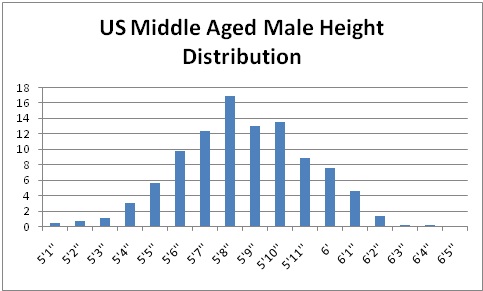


“When you are not with where the majority of Americans are, then, you know, that is extreme. That is an extreme way of thinking.”
1. https://m.youtube.com/watch?v=dButKWnTmG8&feature=emb_title